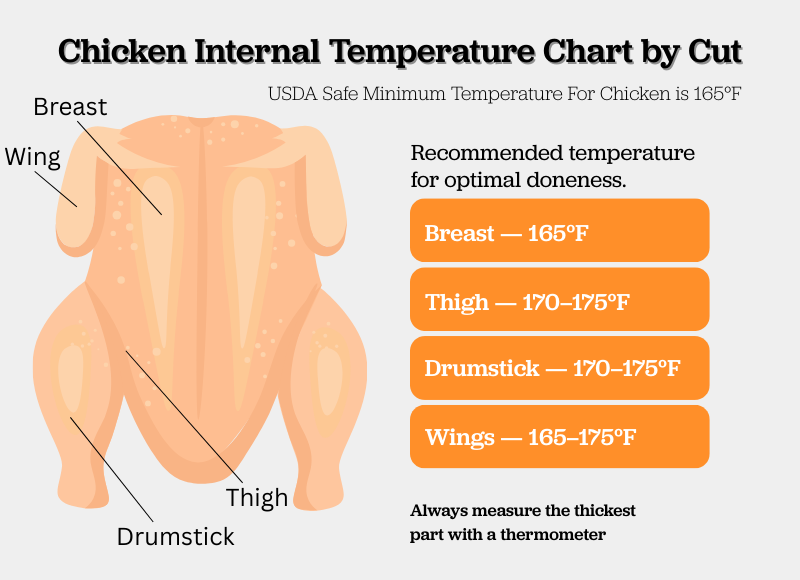
Use this chicken internal temperature chart by cut as a quick reference for safe cooking.
Cooking chicken to the correct internal temperature is the single most important step for food safety and juicy, delicious results. Whether you’re air frying, grilling, roasting, or pan-searing, using a thermometer—and knowing the right temperature for each cut—takes the guesswork out of cooking.
Enjoy this quick and easy reference guide of a chicken internal temperature chart by cut, followed by thermometer placement tips, a clear explanation of pink chicken, and answers to the most common temperature-related questions when it comes to safely cooking chicken.
Chicken Internal Temperature Chart
(USDA-Approved)
Safe minimum internal temperature for all chicken: 165°F
| Chicken Cut | Internal Temperature | Notes |
|---|---|---|
| Chicken Breast (boneless or bone-in) | 165°F | Lean meat; remove promptly to avoid drying out |
| Chicken Thighs | 170–175°F | Higher fat; benefits from slightly higher temps |
| Drumsticks | 170–175°F | Dark meat near bone needs extra heat |
| Chicken Wings | 165–175°F | Texture improves closer to 175°F |
| Whole Chicken | 165°F (thickest part) | Check breast and thigh |
Why the difference? While 165 degrees chicken is the USDA minimum for safety, dark meat cuts like thighs and drumsticks are often juicier and more tender when cooked a little higher.
Where to Place the Thermometer (By Cut)
Correct thermometer placement matters just as much as hitting the right number.
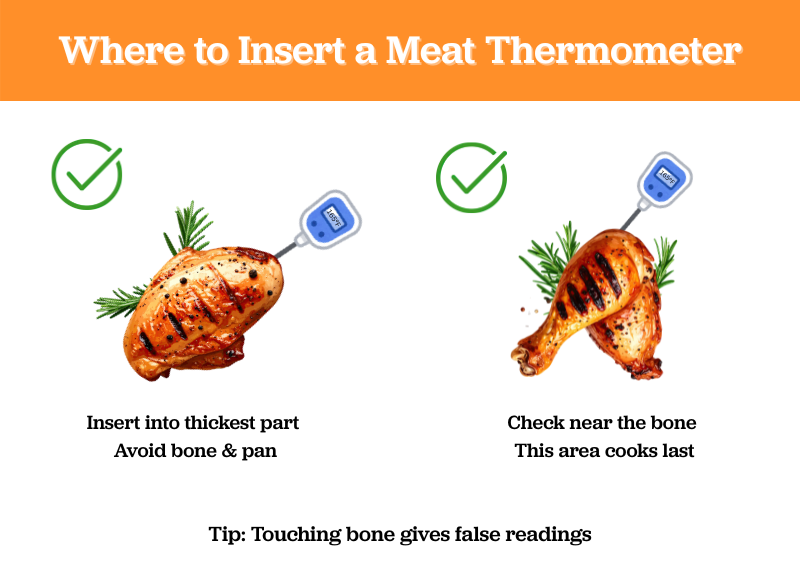
Always measure the thickest part of the chicken for the most accurate reading.
Chicken Breasts
- Insert thermometer into the thickest part
- Avoid touching the pan or bone
Thighs & Drumsticks
- Insert near the bone, but don’t touch it
- This area heats last and gives the most accurate reading
Wings
- Check the meatiest section, usually near the joint
Whole Chicken
- Check two places:
- Thickest part of the breast
- Inner thigh near the bone
👉 For step-by-step cooking guidance, see:
Is Pink Chicken Safe to Eat?
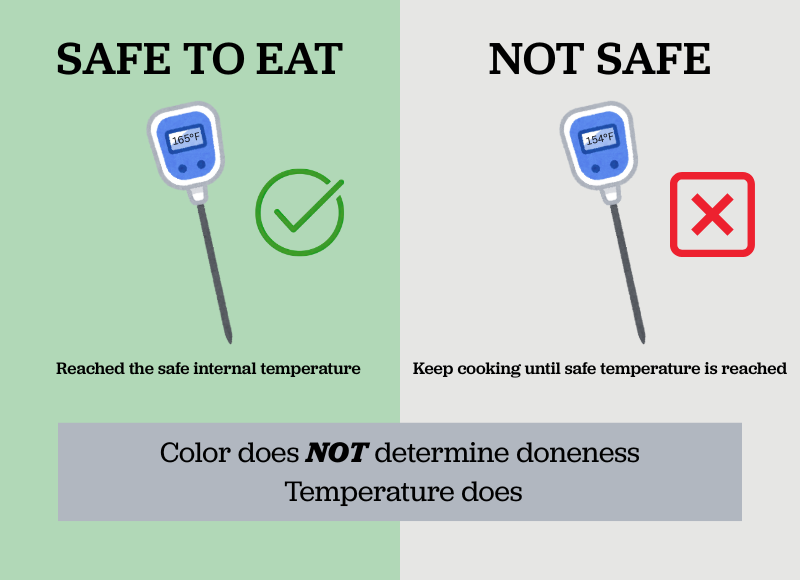
Chicken is safe at 165°F—even if it still appears slightly pink.
One of the most searched chicken safety questions is: is pink chicken safe?
Short answer: Sometimes—temperature matters more than color.
Chicken can appear pink even when fully cooked due to:
- Myoglobin in the chicken meat (Myoglobin is an iron-rich protein in chicken muscle tissue that stores oxygen, functioning as a pigment that determines meat color.)
- Freezing before cooking (This occurs because freezing breaks down bone marrow, releasing pigment that stains the surrounding meat. It is safe to eat if a thermometer confirms it is cooked through.)
- Grilling or smoking
- Bone marrow pigments (especially in young chickens)
If your chicken has reached 165°F at the thickest point, it is safe to eat—even if it still looks slightly pink.
🚫 If the temperature is below 165°F, do not rely on color alone.
Why 165°F Is the Magic Number
The USDA-established minimum internal temperature of 165°F instantly destroys harmful bacteria like Salmonella and Campylobacter.
That means:
- No resting time required for safety
- Immediate safe consumption
- Consistent results across cooking methods
FAQs: Chicken Internal Temperatures & Safety
1. What is the minimum internal temperature for chicken?
165°F for all cuts, according to USDA guidelines.
2. Is it better to cook chicken thighs past 165°F?
Yes. Many cooks prefer 170–175°F for thighs because the connective tissue breaks down, making them juicier and more flavorful.
3. What is the drumsticks internal temp for doneness?
Aim for 170–175°F, especially near the bone.
4. Can chicken be slightly pink and still safe?
Yes—if it has reached 165°F. Temperature matters more than color.
5. Do I need to rest chicken after cooking?
Resting improves juiciness, but it is not required for safety once chicken reaches 165°F.
6. Does air-fried chicken need to reach 165°F too?
Absolutely. All cooking methods require the same internal temperature.
👉 Helpful resource: Air Fryer Chicken Breasts Time & Temperature Guide
7. Should I check temperature near the bone?
Yes—meat closest to the bone cooks last and gives the most accurate reading for dark meat cuts.
8. How can I safely store and reheat chicken?
Follow proper freezing, defrosting, and storage guidelines to maintain safety and quality.
👉 Learn more:
Start With Quality Chicken
Accurate temperatures matter—but starting with high-quality chicken makes every meal better.
Explore options like Springer Mountain Farms Whole Chicken for consistent results you can trust.
Bottom Line
Use this chicken internal temperature chart by cut as your go-to reference for every cooking method. When in doubt, grab your thermometer, aim for 165°F, and enjoy chicken that’s safe, juicy, and perfectly cooked—every time.